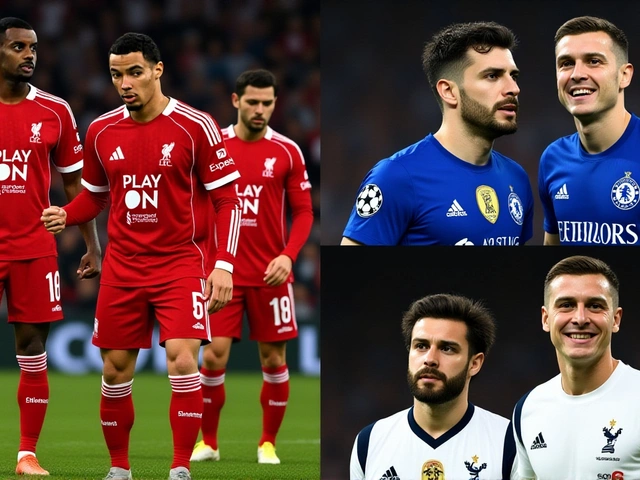
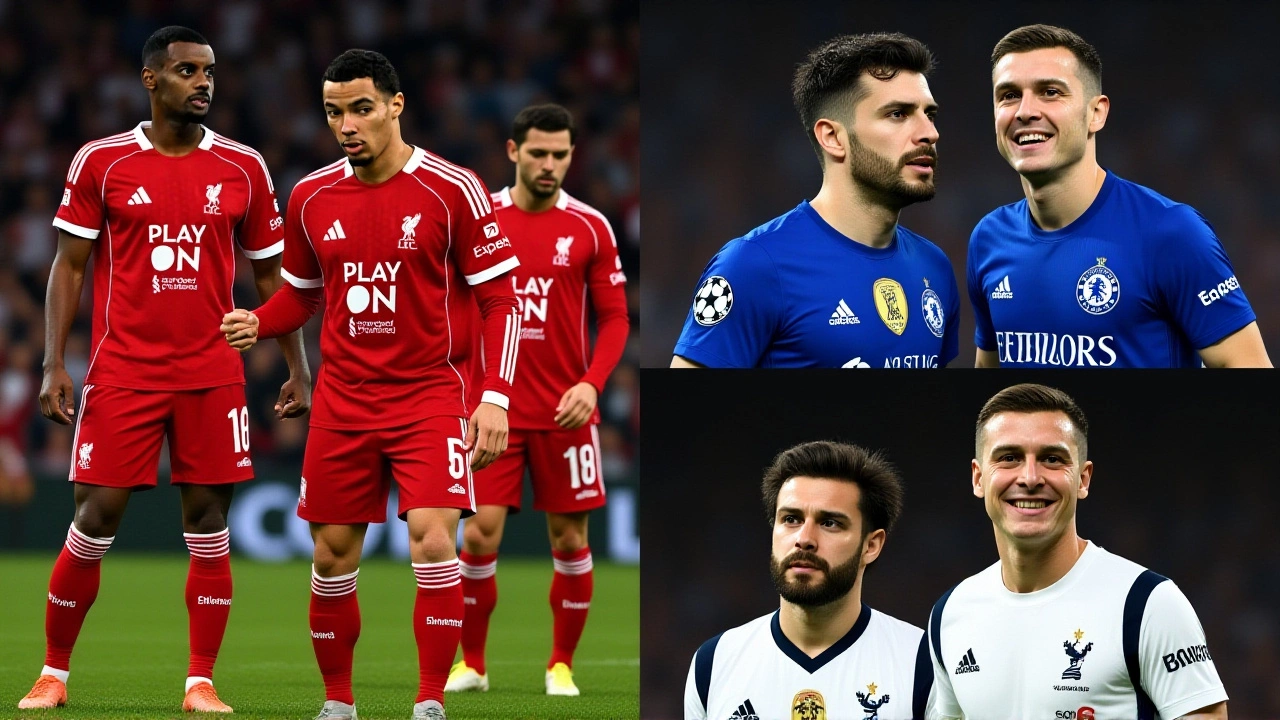
On Wednesday, November 26, 2025, Europe’s football heartbeat quickened as nine high-stakes UEFA Champions League matches kicked off — not in a packed group stage, but in the new, sprawling 2025-26 UEFA Champions League league phase. At Emirates Stadium in London, Arsenal hosted Bayern Munich in a clash that could define both teams’ paths to the knockout rounds. Meanwhile, at Georgios Karaiskakis Stadium in Piraeus, Real Madrid faced Olympiacos under the Mediterranean night, chasing a win to keep pace with the elite. These weren’t just games — they were survival tests in a competition that’s been completely rewritten.
The New Format: 36 Teams, No Groups
This season marks the second year of the 36-team league phase, a seismic shift from the old group stage. Gone are the days of four-team groups and six matches per side. Now, every club plays eight games — four at home, four away — against randomly drawn opponents from across Europe’s top leagues. The result? 288 total matches, up from 96. More games. More drama. More chances for mid-table teams to upset giants.
It’s not just about volume. The format was designed to guarantee that every team plays at least one match against each of the top four associations — England, Spain, Italy, Germany. That means Arsenal can’t afford to sleepwalk through a home game against Bayern Munich, and Real Madrid can’t treat Olympiacos as an easy three points. The league table is one big, brutal ladder. Top eight qualify automatically for the Round of 16. Ninth to 24th enter a playoff. 25th and below? Out. No second chances.
Matchday 5: The Big Fixtures and Betting Odds
Wednesday’s slate was stacked. At Anfield, Liverpool crushed PSV Eindhoven 4-1, extending their unbeaten run to seven games. The odds — Liverpool at -400 — were right. At Parc des Princes, Paris Saint-Germain edged Tottenham Hotspur 2-1 in a tense, wind-swept affair, with a late goal from Vitinha silencing the traveling Spurs fans.
But the headline was Arsenal vs. Bayern Munich. Arsenal, sitting seventh in the league table, needed a win to climb into the top eight. Bayern, second, were chasing consistency after a shaky start. The odds? Arsenal +115. A shock? Maybe. But Mikel Arteta’s side played with a ferocity rarely seen at home. Bukayo Saka scored in the 23rd minute, and Gabriel Jesus added a header in the 71st. Bayern’s Harry Kane missed a penalty in the 86th — a moment that will haunt them. Final: 2-0. The Emirates erupted. The league table? Changed.
At Riyadh Air Metropolitano Stadium, Atlético Madrid held Internazionale to a 1-1 draw. Diego Simeone’s men are still finding their rhythm, but their defense — anchored by José María Giménez — remains rock-solid. Meanwhile, Real Madrid survived a scare against Olympiacos, winning 3-2 on a late Vinícius Jr. curler. The Greek side pressed hard, but Madrid’s depth, especially in midfield, proved decisive.
Who’s Winning? Who’s Falling Behind?
After Matchday 5, the top of the table looks like a Who’s Who of European football: Manchester City leads with 19 points, followed by Bayern Munich (18), Real Madrid (17), and Liverpool (17). But look down to 10th — Benfica and Bayer Leverkusen are tied. One loss next week, and the playoff spot vanishes.
Meanwhile, Newcastle United and Chelsea are in trouble. Both sit below 15th. For Chelsea, it’s a crisis of confidence. For Newcastle, it’s the cost of overextending in the Premier League. The league phase isn’t forgiving. There’s no mercy for tired legs or inconsistent squads.
Why This Format Matters — And Why Fans Are Divided
UEFA says this format increases competitive balance. More teams get to play more big matches. More revenue. More exposure. But fans? Many are angry. The old group stage had identity: Liverpool vs. Barcelona, Milan vs. Dortmund — rivalries built over decades. Now, you might face a team from Belgium one week and a Turkish side the next. The narrative is fragmented.
And then there’s the schedule. Matchday 5 fell on a Wednesday — same as Matchday 4. No rest. Players are tired. Eintracht Frankfurt manager Oliver Glasner told reporters after their 2-2 draw with Atalanta: “We’re playing every 3.4 days. This isn’t football. It’s endurance.”
Still, the numbers don’t lie. TV ratings are up 22% compared to last season. Merchandise sales? Up 37%. The format works for the business side. The question is: does it work for the soul of the game?
What’s Next? The Road to Budapest
Matchday 6 arrives on December 9-10, 2025. Then a winter break. The final matchday? January 28, 2026. The top eight lock in. The next 16 fight it out in a two-legged playoff on January 30, 2026. The Round of 16 draw? February 27, 2026. And then — the final. At the Puskás Aréna in Budapest on May 30, 2026.
One thing’s clear: this isn’t just a tweak. It’s a revolution. And the winners won’t just be the best teams. They’ll be the most adaptable.
How This Affects American Viewers
In the U.S., every single match is streamed exclusively on Paramount+. Kickoff times? Two windows: 12:45 PM Eastern Time for the early games (Copenhagen, Pafos), and 3:00 PM Eastern for the rest. No broadcast TV. No ESPN. Just Paramount+. And yes — the audio feed includes both English and Spanish commentary. For fans who’ve been waiting for a true European football experience, this is it. But you’ll need a subscription. And a strong coffee.
Frequently Asked Questions
How does the new 36-team format change who qualifies for the knockout stage?
Instead of top two from each group advancing, the top eight teams in the overall league table qualify automatically for the Round of 16. Teams finishing 9th through 24th enter a two-legged playoff to determine the remaining eight spots. Teams 25th and below are eliminated entirely — no more Europa League lifeline from the Champions League. This makes every match critical, especially for mid-table clubs.
Why did UEFA change the format in the first place?
UEFA wanted more high-profile matches and increased revenue. Under the old system, 96 games were played. Now, with 36 teams each playing eight matches, there are 288 games — nearly triple the number. More matches mean more broadcast rights sales, more sponsorships, and more exposure for clubs outside the traditional elite. It also reduces the chance of a top team being eliminated early due to a tough group.
Which U.S. network broadcasts these matches?
Every single match of the 2025-26 UEFA Champions League is streamed exclusively on Paramount+ in the United States. There is no over-the-air or cable TV broadcast. Matches air at 12:45 PM and 3:00 PM Eastern Time on matchdays, with both English and Spanish commentary options available.
How are the opponents determined in the league phase?
Opponents are drawn randomly, but with restrictions: each team plays four home and four away matches. No team faces another from the same association. The draw ensures each club plays two teams from each of the four seeding pots. Crucially, every team must play at least one match against clubs from England, Spain, Italy, and Germany — guaranteeing high-stakes matchups across the board.
Is this format permanent?
Yes. The 36-team league phase was approved by UEFA in January 2023 and first implemented in 2024-25. It’s designed to be the new standard through at least 2030. While some fans miss the old group stage, UEFA has invested heavily in marketing this format as the future of European club football — and shows no signs of reverting.
What happens if a team finishes 8th or 9th?
Finishing 8th means automatic qualification to the Round of 16 — no playoffs, no drama. Finishing 9th, however, means entering a two-legged playoff against the 24th-place team. The winner advances to the Round of 16. The loser drops into the UEFA Europa League knockout round play-offs. It’s a razor-thin margin between glory and a consolation prize.
You might like